
What is the best daily routine using chess improvement tools?
If you have ever felt stuck in your chess progress, you are not alone. Many players jump between videos, puzzles, and opening lines without a clear plan. The result is frustration, slow improvement, and wasted time. The truth is simple. It is not about how many tools you use, but how you structure your daily routine using them.
In today’s fast evolving learning environment, combining structured study with visual learning tools is becoming the latest trend. A well designed daily routine built around smart tools can dramatically improve your rating, confidence, and understanding of the game.
In this guide, you will discover a practical, human friendly daily routine using chess improvement tools, including how to integrate visual systems like Chess Maps into your study plan for maximum results.
Why a Daily Chess Routine Matters More Than Ever
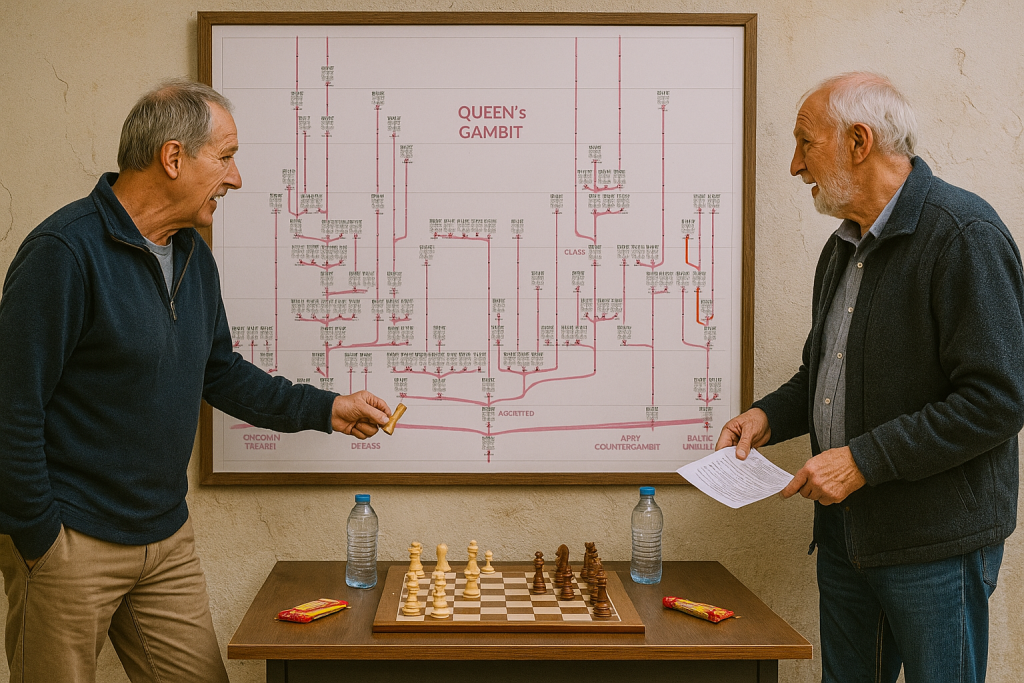
Chess improvement is not random. It is a compounding process. Every small insight builds on the previous one. Without consistency, even the best tools will not help.
A daily routine gives you:
- Direction and clarity
- Better retention of ideas
- Balanced skill development
- Measurable progress over time
Most importantly, it removes decision fatigue. You do not waste time thinking about what to study. You just follow your system.
The Core Idea Behind an Effective Routine
Before jumping into the schedule, understand one key principle:
Your routine should train thinking, not just memory.
That means you need a mix of:
- Tactical sharpness
- Positional understanding
- Opening familiarity
- Practical play
- Self analysis
Modern tools make this easier, especially visual learning systems like Chess Maps, where openings are not just memorized but understood through structured graphical trees.
The Ideal Daily Chess Routine Using Improvement Tools
This routine is designed for players who can dedicate around 60 to 90 minutes daily. You can scale it up or down depending on your availability.
1. Warm Up with Tactical Training (15 to 20 Minutes)
Start your session with tactics. This wakes up your brain and improves pattern recognition.
Use tools like:
- Puzzle trainers on chess platforms
- Mobile apps for quick solving
- Timed puzzle challenges
Focus on quality over quantity. Solve slowly and calculate properly.
Pro Tip:
After each puzzle, ask yourself why the solution works. This builds real understanding.
2. Opening Study with Visual Tools (15 to 20 Minutes)
This is where most players go wrong. They try to memorize long lines without context.
Instead, use a visual system like Chess Maps.
Chess Maps offers:
- Complete graphical opening trees
- Clear structure of variations
- Visual memory reinforcement
- Big picture understanding of openings
Rather than memorizing moves blindly, you see how openings connect. This makes recall easier during real games.
How to use it daily:
- Pick one opening you play
- Study 1 to 2 branches only
- Focus on ideas, not just moves
- Revisit the same lines regularly
Consistency beats overload.
3. Play One Focused Game (15 to 25 Minutes)
Playing is essential. Without it, study has no real impact.
Choose:
- Long games for deeper thinking
- Blitz or Rapid games only if time is limited
Before starting, set a goal such as:
- Applying your opening knowledge
- Avoiding blunders
- Improving time management
Important:
Do not play multiple games mindlessly. One focused game is far more valuable.
4. Immediate Self Analysis (10 to 15 Minutes)
This is the most underrated part of improvement.
After your game:
- Review without an engine first
- Identify critical mistakes
- Ask what you were thinking during those moments
Then use an engine to verify your ideas.
Key Questions to Ask:
- Where did I lose the advantage
- Did I follow my opening plan
- What pattern did I miss
This step turns experience into learning.
5. Endgame or Strategy Practice (10 to 15 Minutes)
Rotate this section daily.
Day 1: Endgames
Day 2: Positional concepts
Day 3: Model games
Endgames teach precision. Strategy teaches planning. Both are essential.
Weekly Structure for Maximum Growth
Your daily routine works best when combined with a weekly focus.
Example Weekly Plan:
- Monday: Openings and tactics focus
- Tuesday: Endgames and analysis
- Wednesday: Strategy and model games
- Thursday: Openings reinforcement
- Friday: Tactical intensity
- Saturday: Longer games and deep analysis
- Sunday: Light review and rest
This keeps your training balanced and prevents burnout.
How Chess Maps Enhances Your Routine
Chess Maps is not just another tool. It is a visual learning concept designed to simplify complexity.
What Makes It Unique?
- Large A0 posters show complete opening structures
- A1 posters provide beginner friendly summaries
- Every named variation is visually connected
- Helps both memory and understanding
Instead of flipping through endless digital lines, you can see the entire opening landscape in one place.
This is especially powerful for:
- Visual learners
- Beginners building a foundation
- Intermediate players refining their repertoire
Common Mistakes to Avoid
Even with a solid routine, many players struggle due to these mistakes:
1. Overloading on Tools
Using too many platforms leads to confusion. Stick to a few effective ones.
2. Skipping Analysis
Playing without reviewing is like practicing mistakes.
3. Memorizing Without Understanding
This leads to collapse when opponents deviate.
4. Inconsistent Practice
Irregular training slows progress dramatically.
How to Customize Your Routine
Your routine should match your level.
Beginners
- Focus more on tactics and basic openings
- Use beginner level Chess Maps posters
- Play shorter games
Intermediate Players
- Balance all areas
- Study deeper opening ideas
- Analyze games more seriously
Advanced Players
- Focus on refinement
- Deep opening preparation
- Advanced endgame techniques
Tools You Can Combine with Chess Maps
To build a powerful system, combine visual tools with digital platforms:
- Online chess platforms for games
- Puzzle apps for tactics
- Databases for game analysis
- Video lessons for strategy
But remember, structure matters more than quantity.
Sample 60 Minute Daily Routine
Here is a quick version if you are short on time:
- 15 minutes tactics
- 15 minutes opening study with Chess Maps
- 15 minutes game
- 15 minutes analysis
Simple, effective, and sustainable.
The Psychology Behind Consistency
Improvement in chess is not just technical. It is mental.
A daily routine builds:
- Discipline
- Focus
- Confidence
Small daily wins create long term growth. Missing one day is fine. Missing many breaks momentum.
Tracking Your Progress
To stay motivated, track your improvement.
You can monitor:
- Rating changes
- Puzzle accuracy
- Opening success rate
- Reduction in blunders
Even a simple notebook works.
Final Thoughts
The best daily routine using chess improvement tools is not the most complex one. It is the one you can follow consistently.
By combining tactics, visual opening study, practical play, and self analysis, you create a complete system for growth.
Chess Maps fits perfectly into this routine by transforming how you understand openings. Instead of memorizing scattered moves, you build a clear mental map of the game.
And that is where real improvement begins.
FAQs
What is the best time to practice chess daily?
The best time is when you can focus without distractions. Many players prefer morning or late evening sessions.
Can I improve with just 30 minutes a day?
Yes, if your routine is structured. Consistency matters more than duration.
Are chess improvement tools really necessary?
They are not mandatory, but they accelerate learning when used correctly.
How often should I study openings?
A few minutes daily is enough if you use visual tools and review consistently.
Is Chess Maps suitable for beginners?
Yes. The A1 posters are designed for beginners and provide a clear overview of main openings.
Ready to Upgrade Your Chess Routine?
Discover a smarter way to learn openings with visual clarity and structured understanding. Visit Chess Maps and transform how you study chess today.
